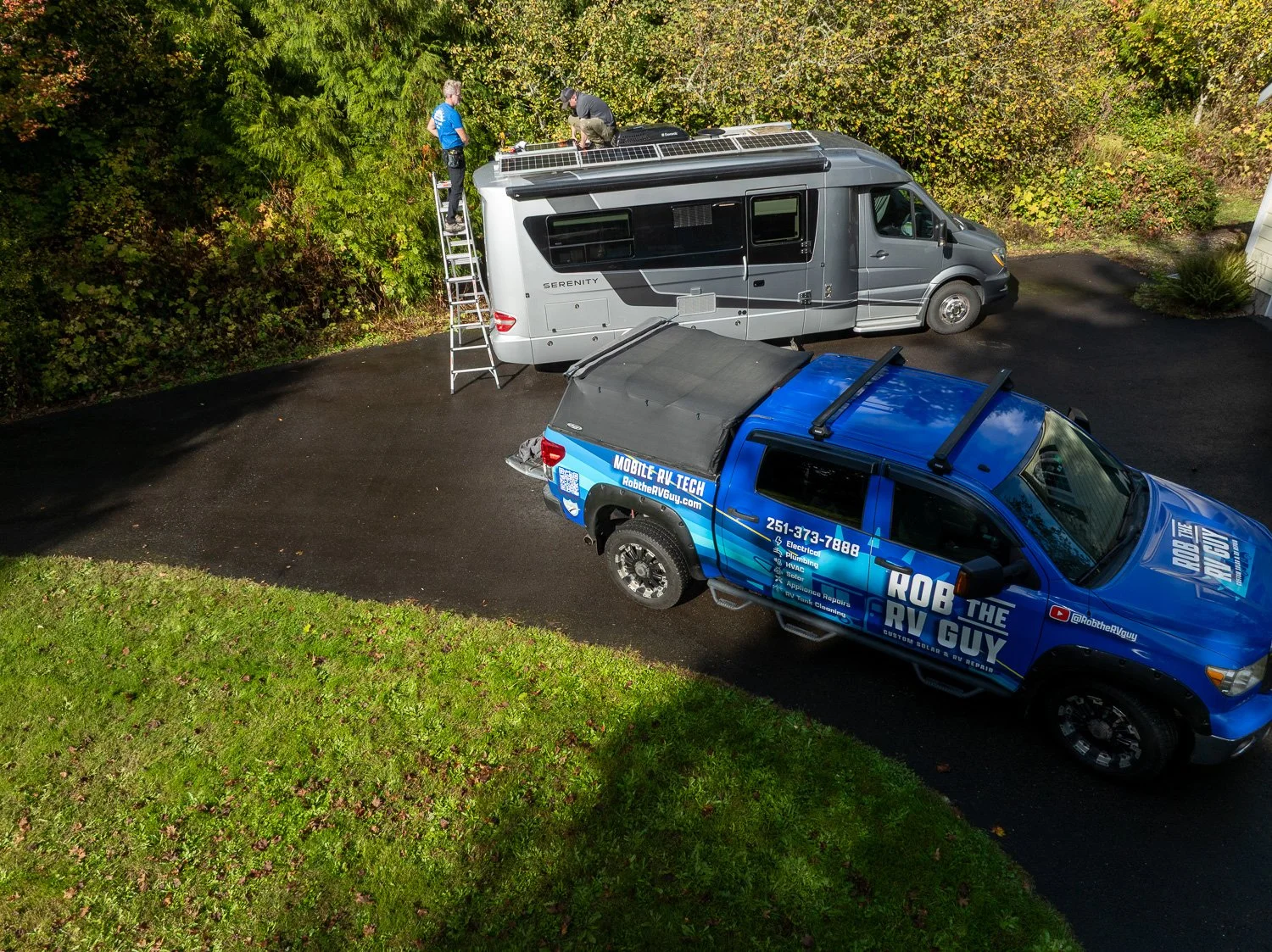
When you look closely at high-end Class B coaches, Leisure Travel Vans always stand out. They are beautiful, well-engineered, and built on premium chassis. But even on an expensive factory rig, the original electrical setup can fall flat if your goal is true, extended off-grid living.
We recently retrofitted one of these LTVs to fix that exact problem. The owners loved their van but were running into endless electrical issues from a weak factory system and corroded, high-resistance wire connections. They wanted a reliable setup that allowed them to boondock indefinitely and run appliances comfortably—all without relying on a noisy generator.
Upgrading a Class B van requires tight spatial planning, meticulous electrical troubleshooting, and smart engineering choices. Here is a look at the technical layout and structural strategies that went into making this motorized coach fully off-grid capable.
Technical Component Layout
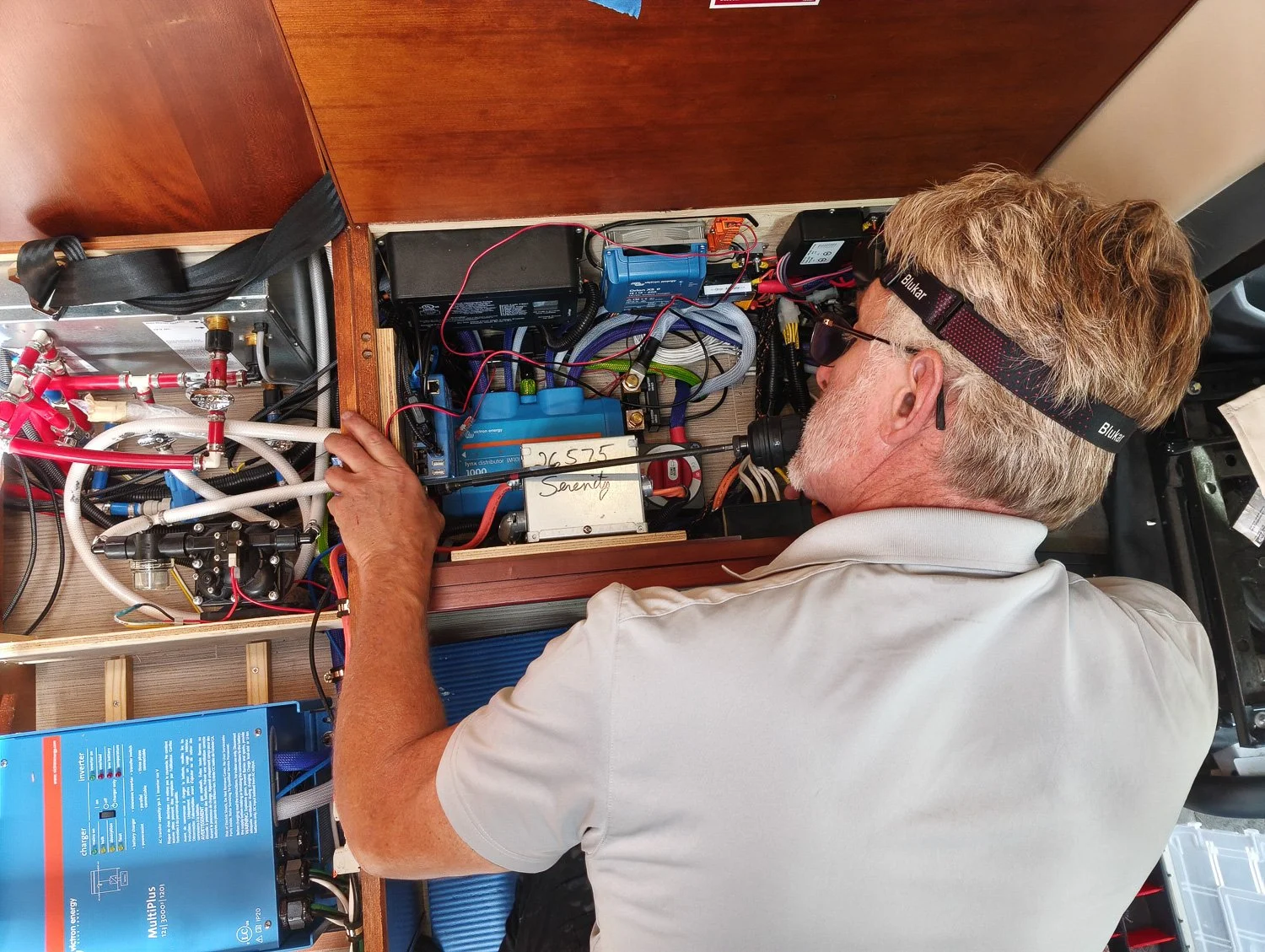
Because van space is at an absolute premium, retrofitting a large system requires utilizing existing footprints efficiently. For this build, we removed an under-seat drawer and rearranged factory components inside the dinette seat cabinet to flush-mount the equipment safely.
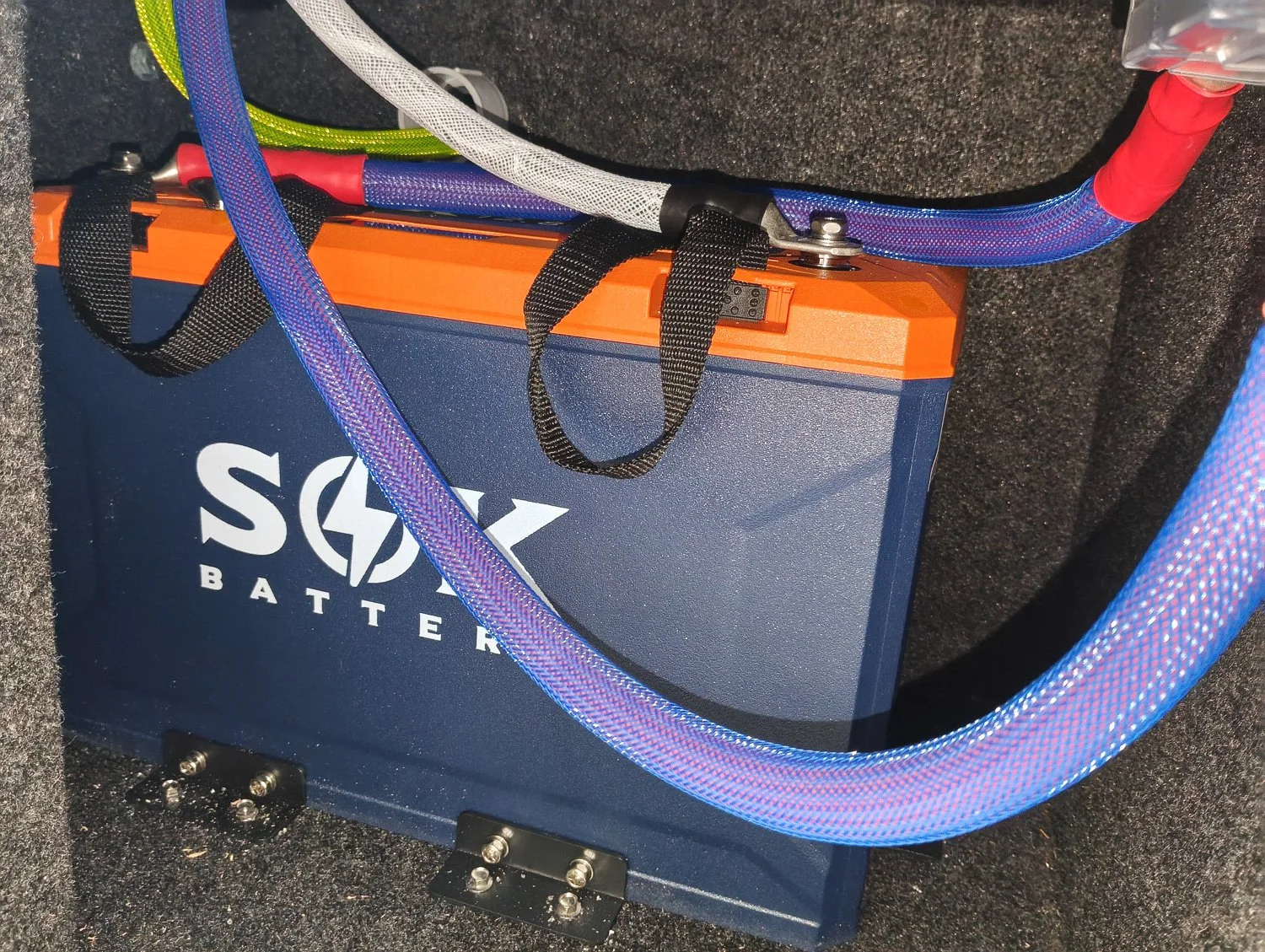
The completed 12V ecosystem features a fully integrated network of premium components:
Battery Storage: A 314Ah SOK Lithium Iron Phosphate (LiFePO4) 12V battery, installed in the driver-side exterior storage compartment. The pan was sized intentionally to leave physical room for an additional battery if the owners choose to expand their capacity down the road.
Inverter/Charger: A Victron MultiPlus 12V Inverter to deliver reliable AC power to the outlets and appliances.
DC-DC Alternator Charging: A Victron Orion 12/50 DC-DC charger to allow the vehicle's engine to safely charge the lithium bank while driving.
System Controls: A Victron Cerbo GX acting as the central communications hub, managing data from the charge controllers, battery monitor, and thermal sensors.
Safety & Distribution: A Victron Lynx Distributor coupled with a dedicated solar disconnect switch to keep the high-amperage lines fused, clean, and organized.
Overcoming Class B Structural Challenges
Retrofitting an aftermarket system into a motorized coach presents a completely different set of rules than a traditional travel trailer or fifth wheel. Every square inch of the van is built tightly around the chassis at the factory, requiring unique layout and logic solutions.
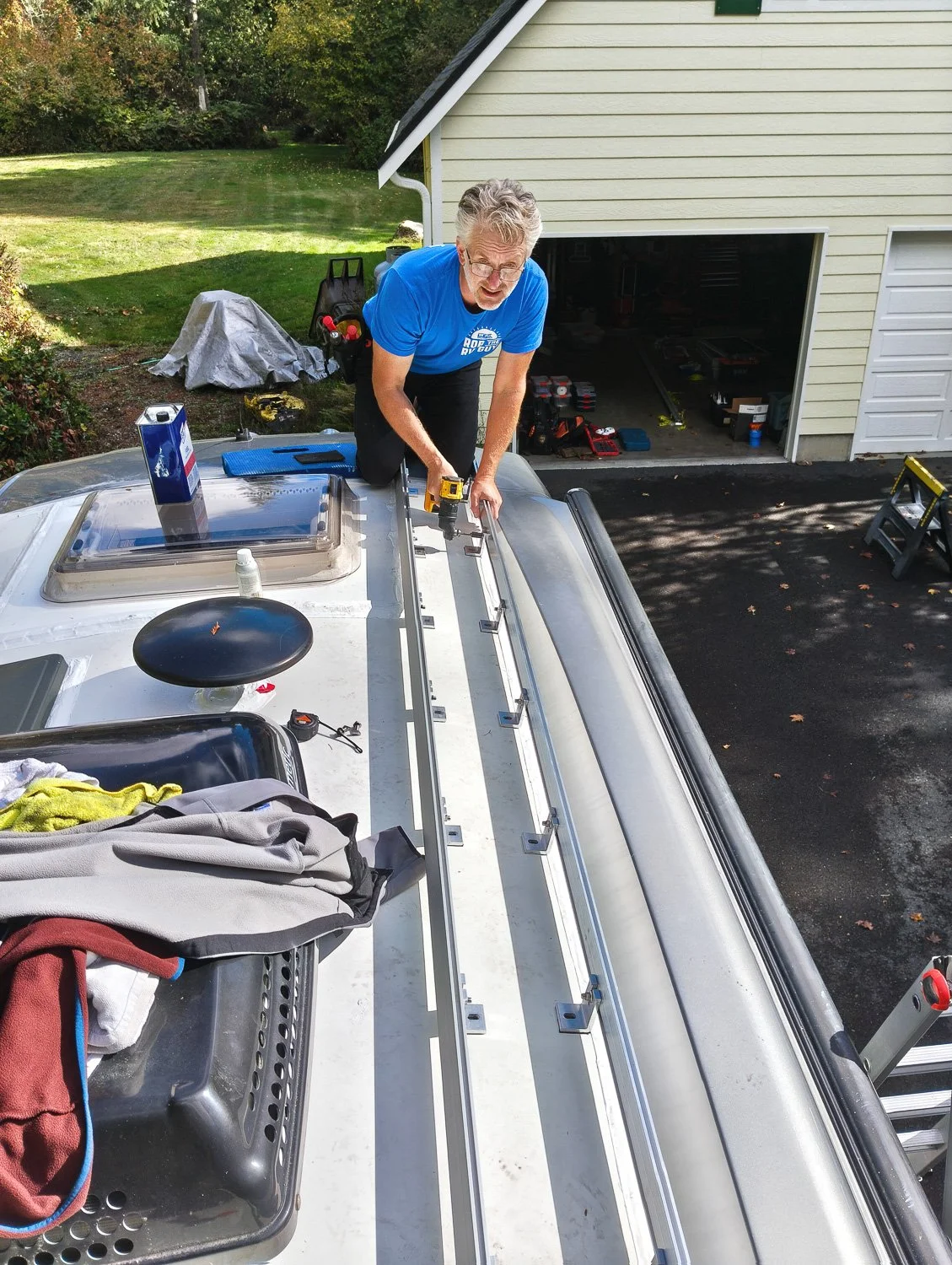
1. Roof Integration via Solar Rail Systems
For the roof array, we mounted 800 Watts of premium Rich Solar panels using a custom rail system rather than traditional individual mounting brackets. A continuous rail system offers two major advantages for long-term fleet maintenance:
Service Accessibility: If a panel experiences physical damage from a low-hanging tree branch, traditional brackets make it incredibly difficult to remove the panel without disrupting the roof seal. With a rail system, a technician can pull a few bolts and pop that single panel straight off.
Future Upgrades: If the owner ever needs to service or replace the rooftop air conditioner, the rail system allows three panels to be effortlessly unbolted, slid out of the way for the AC work, and locked right back into position.
To address real-world travel conditions, the 800W array was wired in a series-parallel configuration. This layout ensures that partial shading on one side of the roof—common when parked under trees—doesn't choke out the power production of the remaining panels.
2. Battery Safety and Chassis Logic
Transitioning a motorized rig from factory lead-acid batteries to a high-capacity lithium system requires a deep look at the vehicle's factory wiring schematics. Motorized coaches utilize complex interlock logic modules built into the chassis. If safety items like leveling jacks or slide-outs aren't completely retracted, the chassis logic prevents the engine from starting.
When introducing a high-output DC-DC alternator charging system, the wiring must be integrated cleanly to ensure these factory logic loops remain completely unaffected and functional.
3. Compartment Thermal Management
High-output electronics packed inside a sealed dinette cabinet generate considerable heat under load. To prevent the chargers and inverter from thermal derating, we integrated a custom 12V ventilation system directly behind the Victron Orion charger.
The fan network is automated and programmed directly through the Cerbo GX. The moment the internal air pocket inside the compartment reaches 90°F, the system triggers the fans to pull fresh air into one end of the cabinet, push it past the heat sinks, and exhaust it out the opposite side, maintaining a stable operating temperature.
System Monitoring and Remote Diagnostics
Inside the living space, a Victron Touch screen display was flush-mounted directly into the closet wall cavity where the old factory charge controller used to live, giving the owners a clean, centralized look at their power levels.
Beyond the physical display, the heart of the system monitoring relies on the Victron Remote Management (VRM) portal.
By linking the Cerbo GX to the VRM cloud, the owners gain full visibility of their historical solar yields, live consumption metrics, and exact battery state-of-charge right from their smartphones via the Victron Connect app.
Crucially, this cloud integration allows for remote dealer support. As a certified installer, I can securely log into my clients' VRM dashboards from anywhere in the country to audit their system's performance, run diagnostics, and ensure their battery bank is balanced and tracking correctly while they travel.
Custom RV Electrical Solutions
Achieving true power independence on the road requires an electrical system that is clean, fused, and tailored specifically to your travel style. Whether you are designing a robust 12V, 24V, or a highly efficient 48V system, proper sizing and component integration prevent the common pitfalls of factory limitations.
We provide certified RV repair and custom solar installation services, handling mobile jobs during our seasonal travels or coordinating on-site work directly at your home or preferred location.
If you are ready to look at a custom power upgrade for your rig, head over to our contact page, submit a detailed service request with your vehicle specifications, and we will get to work building out an energy plan for your travels.